
The Story
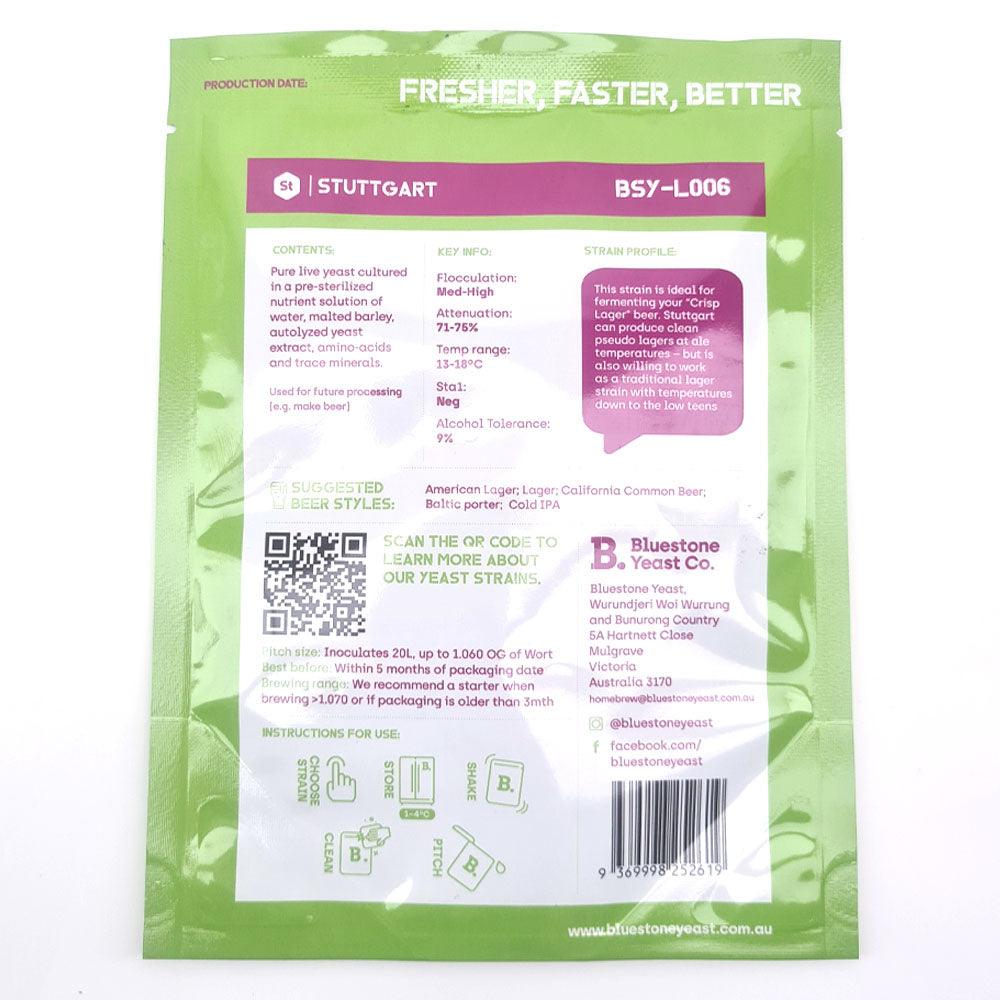
Stuttgart is ideal for fermenting your "Crisp Lager" beer.
It can produce pseudo lagers at ale temperatures but also performs as a traditional lager strain down at low teen temperatures.
We highly recommend a Dry Ice Pack or two for your yeasts voyage OR for a short stay in our pick up lockers in the warmer months of the year.
Please choose Australia Post Express if you want to reduce the the risk of transit time delay and its affect on your yeast.
Bluestone Yeast - Stuttgart (BSY-L006)
Stuttgart is ideal for fermenting your "Crisp Lager" beer.
It can produce pseudo lagers at ale temperatures but also performs as a traditional lager strain down at low teen temperatures.
| Attenuation | 71% - 75% |
| Flocculation | Medium-High |
| Growth Temp Range | 13°C - 18°C |
To ensure a healthy fermentation it is a good idea to incorporate some yeast nutrient in your brewing. You can purchase some here.
The benefits of using yeast nutrient are described in the pdf and video below:
Details & Craftsmanship
Every detail has been carefully considered to bring you the perfect product.
Description
Stuttgart is ideal for fermenting your "Crisp Lager" beer.
It can produce pseudo lagers at ale temperatures but also performs as a traditional lager strain down at low teen temperatures.
We highly recommend a Dry Ice Pack or two for your yeasts voyage OR for a short stay in our pick up lockers in the warmer months of the year.
Please choose Australia Post Express if you want to reduce the the risk of transit time delay and its affect on your yeast.
Bluestone Yeast - Stuttgart (BSY-L006)
Stuttgart is ideal for fermenting your "Crisp Lager" beer.
It can produce pseudo lagers at ale temperatures but also performs as a traditional lager strain down at low teen temperatures.
| Attenuation | 71% - 75% |
| Flocculation | Medium-High |
| Growth Temp Range | 13°C - 18°C |
To ensure a healthy fermentation it is a good idea to incorporate some yeast nutrient in your brewing. You can purchase some here.
The benefits of using yeast nutrient are described in the pdf and video below: